Purpose: Provides high-speed internet from low Earth orbit (LEO) satellites.
Orbit: Starlink satellites operate roughly 550 km above Earth, much closer than traditional geostationary satellites, which helps reduce latency.
Performance: Starlink service can provide broadband speeds suitable for streaming, video calls, gaming, and normal internet use, though speeds vary by location and network congestion.
Technology: Newer Starlink generations incorporate improved antennas, higher-capacity communications, and better coordination between satellites.
Coverage: A large constellation of satellites works together to provide coverage, including in many rural and remote areas.
User equipment: Customers typically use a Starlink dish/terminal that communicates with satellites overhead.
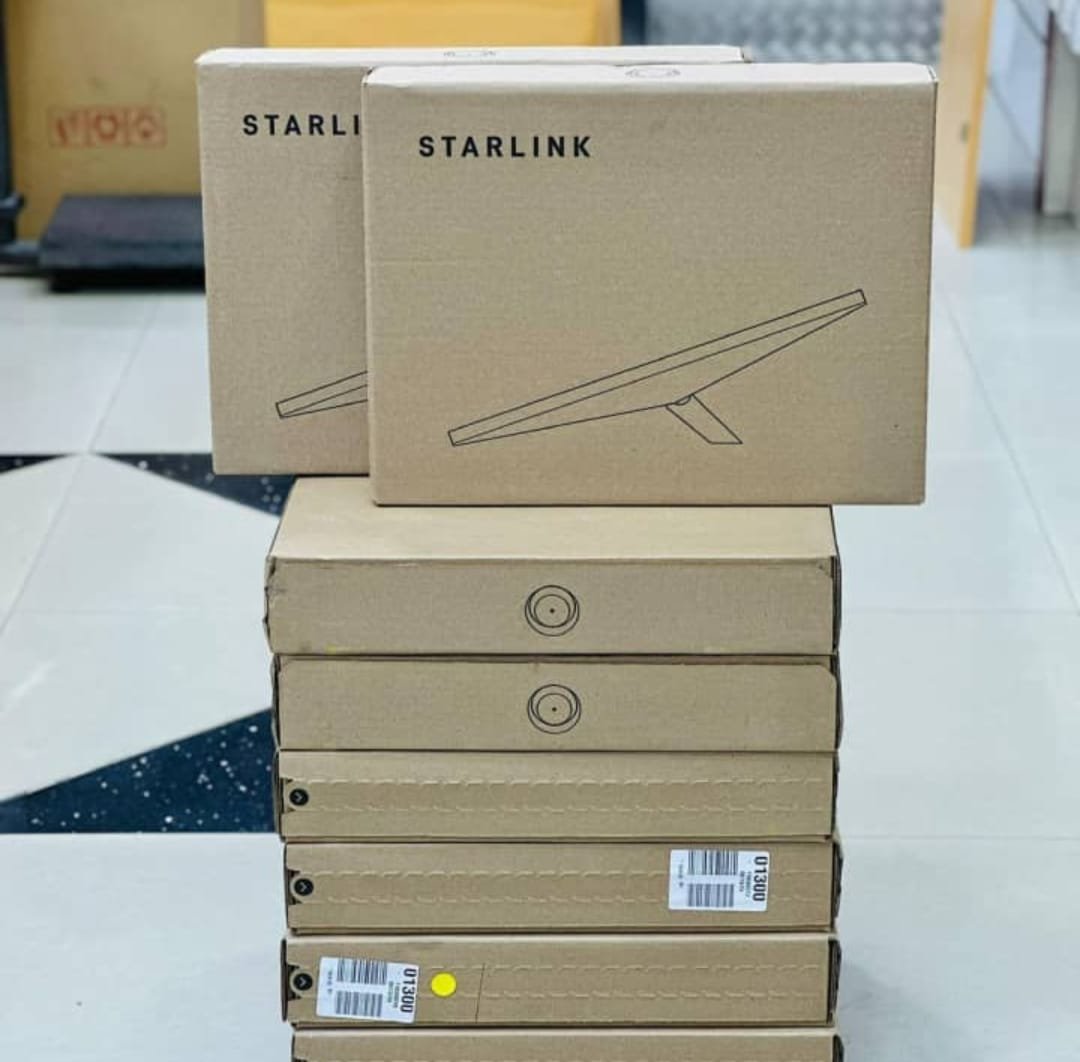
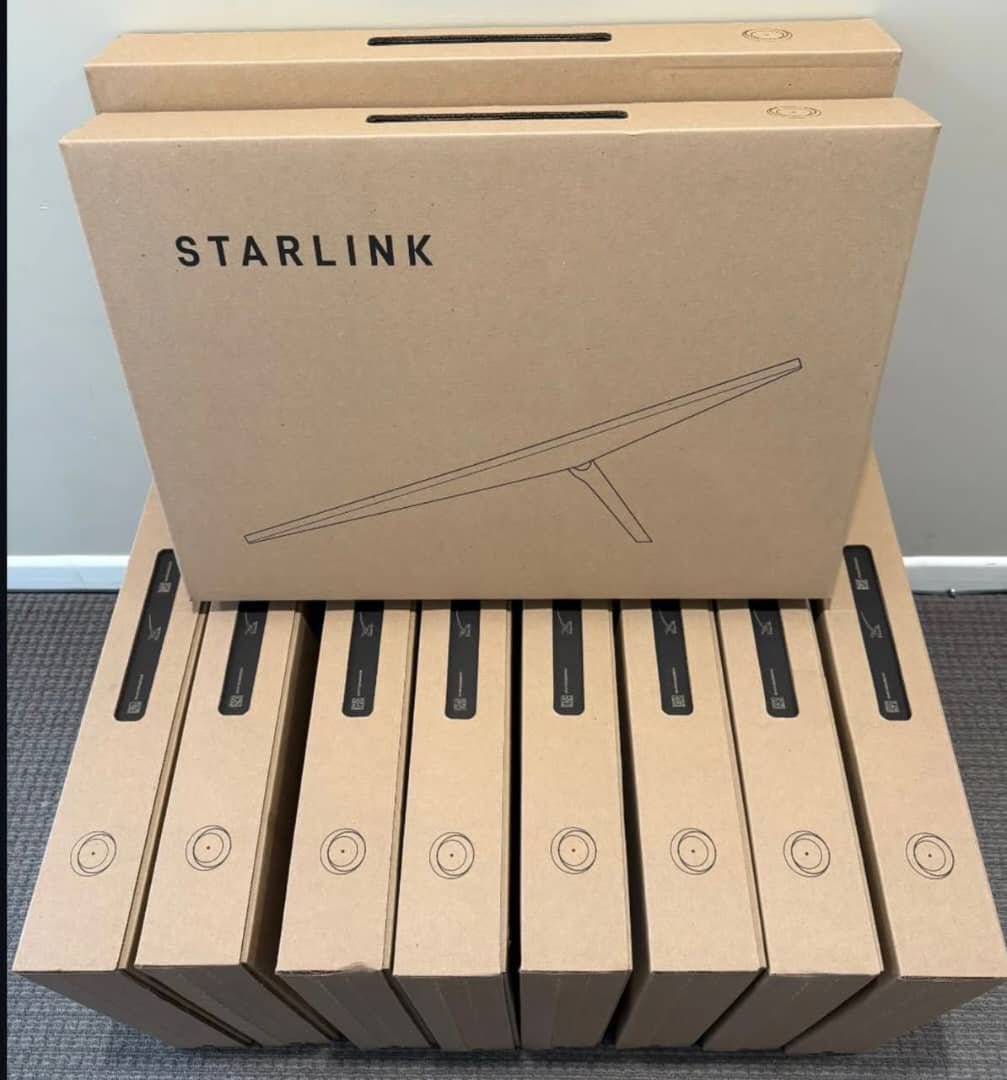
Starlink V4/X
Original price was: $8,550.00.$6,900.00Current price is: $6,900.00.
If you are sourcing starlink liquidation pallets for sale, understanding the difference between Starlink V4 Standard and Standard 4X hardware can help you evaluate inventory more accurately, price units competitively, and avoid buying a pallet based only on a model name.
For resellers, the important question is not simply which Starlink kit is “better.” It is what hardware configuration you are actually receiving, what accessories are included, what condition the units are in, and whether the intended customer can activate and use the equipment in their market.
The current Starlink Standard 4X specification lists an electronic phased-array antenna measuring 594 × 383 × 39.7 mm, with a 110-degree field of view, IP67 Type 4 environmental protection, and typical power consumption of 75–100 W.
That makes specification verification especially important when comparing wholesale Starlink pallets from liquidation, overstock, returns, or closeout channels.
Starlink V4 vs Standard 4X: Quick Reseller Overview
The terminology surrounding Starlink hardware can be confusing because retailers and distributors may describe closely related configurations using terms such as V4 Standard, Standard 4, Standard 4X, Gen 3, or V4X.
One current product listing identifies Standard 4 as a V4 Standard configuration with the Mini Router, while Standard 4X is described as a residential Gen 3 or V4X configuration paired with the Gen 3 Router.
For liquidation buyers, therefore, the box label, SKU, included router, accessories, physical condition, and serial information are more useful than relying on the word “V4” alone.
Key specifications to check
| Reseller Check | What to Look For |
|---|---|
| Antenna | Electronic phased-array Starlink Standard antenna |
| Dimensions | Approximately 594 × 383 × 39.7 mm |
| Field of view | 110 degrees |
| Environmental rating | IP67 Type 4 |
| Typical power | About 75–100 W |
| Cable | Commonly a 15 m / 49.2 ft cable |
| Mount | Kickstand may be included |
| Router | Verify whether the kit includes Mini Router or Gen 3 Router |
| Condition | New, open-box, tested return, used, or untested |
| Accessories | Confirm power supply, cables, mount, and router |
Starlink’s published Standard 4X specification confirms the 594 mm × 383 mm × 39.7 mm antenna dimensions, 2.9 kg antenna weight, 3.2 kg weight with kickstand, 110-degree field of view, IP67 Type 4 rating, and 75–100 W average power consumption.
What Is Starlink V4 Standard?
“Starlink V4 Standard” is commonly used by sellers to identify the Standard-generation hardware associated with the V4 platform.
For reseller inventory, the term can refer to a kit configuration rather than a completely different category of satellite service. One current distributor listing describes its Standard 4 kit as the V4 Standard antenna with Starlink Mini Router.
That distinction matters when buying liquidation inventory.
A pallet advertised as “Starlink V4” should be inspected to determine:
- Which antenna generation is included
- Which router is included
- Whether the power supply is present
- Whether the 15 m cable is included
- Whether the kickstand or other mounting hardware is present
- Whether units are new, open-box, returned, or tested
- Whether packaging and serial labels are intact
A reseller who verifies those details can create more accurate listings and reduce customer disputes.
What Is Starlink Standard 4X?
Standard 4X is another Standard-kit configuration currently appearing in Starlink-related distribution channels.
The published Standard 4X specification describes an electronic phased-array antenna with a 110-degree field of view, IP67 Type 4 environmental rating, software-assisted manual orientation, and 75–100 W average power consumption.
Current distributor information associates Standard 4X with the Gen 3 Router, while the closely related Standard 4 configuration is associated with the Mini Router.
For liquidation buyers, this router difference can be commercially important because customers may expect a specific configuration based on the product description.
Starlink V4 vs Standard 4X for Resellers
The biggest opportunity is not necessarily choosing one model over the other. It is buying the right inventory at the right acquisition cost and accurately communicating what is included.
1. Hardware configuration
The antenna dimensions and core physical specifications can be very similar between Standard configurations. That means visual inspection alone may not be enough to identify every configuration.
Check the SKU, packaging, router, accessories, and documentation before assigning a product title.
2. Router configuration
The router is one of the most important differences to verify.
Current distributor listings associate the V4 Standard/Standard 4 configuration with the Mini Router and Standard 4X with the Gen 3 Router.
For resale listings, clearly state the router included with each unit rather than using a broad “Starlink V4” description.
3. Physical condition
Liquidation inventory can contain substantially different conditions.
A pallet may include:
- Factory-sealed units
- Open-box inventory
- Customer returns
- Shelf-pull merchandise
- Tested working units
- Units missing accessories
- Untested units requiring inspection
Condition should be documented before advertising the inventory as new.
4. Accessories and completeness
A Starlink kit without its required components may have a very different resale value from a complete kit.
Before purchasing starlink liquidation pallets for sale, ask for an inventory manifest whenever available and confirm the expected quantities of:
- Antennas
- Routers
- Power supplies
- Cables
- Kickstands
- Mounting components
- Original packaging
- Manuals or setup materials
5. Regional considerations
Resellers operating in the USA, Canada, UK, Europe, Australia, Germany, France, Spain, England, or Asian markets should also consider local service availability, regulatory requirements, taxes, import duties, warranty terms, and compatibility before advertising Starlink hardware.
Hardware resale does not automatically guarantee that a particular service plan or activation option is available in every location.
Why Buy Wholesale Starlink Pallets From Liquidation Store Near Me US?
For resellers, sourcing is about more than finding the lowest pallet price. Reliable inventory information, transparent condition grading, practical support, and accurate product descriptions can have a direct effect on resale margins.
At Liquidation Store Near Me US, buyers can approach Starlink liquidation inventory as a resale opportunity rather than simply purchasing an unidentified mixed load.
What professional resellers should look for
Quality control:
Inspect or grade inventory according to condition whenever possible, separating sealed, open-box, tested, incomplete, and untested units.
Transparent sourcing:
Ask about pallet condition, quantities, manifests, included accessories, and known defects before committing to a large order.
Accurate descriptions:
Model and configuration information should be presented clearly so buyers know whether they are receiving V4 Standard, Standard 4, Standard 4X, or another configuration.
Support:
Wholesale buyers often need help understanding pallet quantities, condition grades, shipping arrangements, and product documentation.
Efficient fulfillment:
Fast, properly documented shipping can make a meaningful difference when inventory is being purchased for an upcoming resale campaign.
Compliance-minded selling:
Resellers should avoid promising Starlink service availability, activation, performance, or warranty coverage unless those claims have been independently verified for the customer’s market.
Common Use Cases & Buyer Scenarios
Wholesale Starlink inventory can appeal to several types of buyers and resale businesses.
- Electronics resellers looking for high-demand satellite internet equipment
- Liquidation buyers seeking complete technology kits at wholesale acquisition prices
- Online marketplace sellers who can accurately test, grade, photograph, and list individual units
- IT equipment dealers supplying connectivity hardware to residential or business customers
- Rural connectivity specialists serving customers who need alternatives to traditional broadband
- Export-oriented resellers sourcing inventory for approved international markets
- Wholesale buyers looking for multiple Starlink units rather than individual retail purchases
- Clearance and overstock sellers searching for recognizable technology brands with resale potential
Before buying a Starlink liquidation pallet, ask these questions
- How many complete Starlink kits are included?
- Are the units V4 Standard, Standard 4, Standard 4X, or mixed?
- Which router comes with each kit?
- Are the power supplies and cables included?
- What percentage of units are tested?
- What percentage are sealed or open-box?
- Are serial numbers and product labels intact?
- Is a manifest available?
- What accessories are missing?
- What are the shipping terms and pallet dimensions?
- Are there regional restrictions that could affect the intended resale market?
- What return or dispute process applies to wholesale inventory?
How to Evaluate Starlink Liquidation Pallets for Sale
A low pallet price does not automatically mean a high-margin opportunity.
Use a simple landed-cost calculation:
Landed cost per sellable unit = pallet purchase price + freight + fees + testing/repair costs ÷ number of sellable units
Then estimate your realistic resale price after marketplace fees, payment processing, returns, taxes, and customer-service costs.
For example, if a pallet contains 50 units but only 42 are complete and resale-ready, your effective acquisition cost should be calculated against those 42 sellable units rather than all 50.
This approach gives resellers a much more realistic picture of potential margins.
Build a Better Resale Listing
Once the inventory has been inspected, create listings that answer customer questions before they ask them.
A strong Starlink listing should identify:
- Exact product configuration
- Condition
- Included accessories
- Missing components
- Testing status
- Quantity available
- Packaging condition
- Shipping information
- Any relevant regional or service-plan limitations
Avoid vague titles such as “Starlink V4 Wholesale.”
A more useful listing structure would identify the exact configuration and condition, followed by the quantity and included equipment.
That improves buyer confidence and can reduce returns caused by mismatched expectations.
Final Verdict: Which Is Better for Resellers?
For liquidation and wholesale buyers, there is no universal winner between Starlink V4 Standard and Standard 4X.
The better purchase is the pallet with the clearest configuration, strongest condition mix, complete accessories, reliable documentation, and acquisition cost that leaves room for a realistic resale margin.
Standard 4X specifications currently show a 110-degree field of view, IP67 Type 4 protection, approximately 75–100 W average power consumption, and the same 594 × 383 × 39.7 mm antenna dimensions associated with the Standard platform.
Because configuration names can vary between distributors, resellers should verify the actual hardware instead of purchasing solely on a V4 or 4X label.
If you are sourcing starlink liquidation pallets for sale or comparing wholesale Starlink pallets, start with the manifest, condition, router configuration, accessory completeness, and landed cost. Those factors are much more useful for estimating resale potential than the model name alone.
Ready to Source Wholesale Starlink Inventory?
If your business is looking for Starlink liquidation inventory, review available pallet opportunities carefully and compare the configuration, condition, completeness, and expected resale value before ordering.
Contact Liquidation Store Near Me US to discuss available Starlink V4 and Standard 4X inventory, wholesale quantities, pallet condition, and shipping options.
Related products
-
Pallets
Kitchen Appliances | Reliable
Original price was: $800.00.$350.00Current price is: $350.00. Add to cart -
Pallets
Wholesale Power Tools
Original price was: $1,500.00.$750.00Current price is: $750.00. Add to cart -
Pallets
AMZ Customer Returns – 6ft Mediums
Original price was: $600.00.$400.00Current price is: $400.00. Add to cart



Reviews
There are no reviews yet.